

Legora is a collaborative AI platform for legal work that seeks to become the operating system for that work, built to help lawyers move faster, think sharper, and spend more time on high-impact tasks. That means one connected workspace for research, review, drafting, and client work inside the same system. The company is trying to sit at the point where legal work is assembled, checked, and passed across teams, with the prompt box folded into a larger system. It wants to shape the flow of a file from first review to final handoff.
It is aimed at a trade with vast training and scarce time. The work that drove its creation was the grind of document review, research, and repeated drafting. Law firms are pouring cash into tech while clients still buy most work by the hour, which leaves firms under strain when software cuts ten hours of work to two and the bill model stays put. In the same period, many in-house teams have begun to pull low-value repeat work back inside, and client signals on AI now pull in both directions at once.
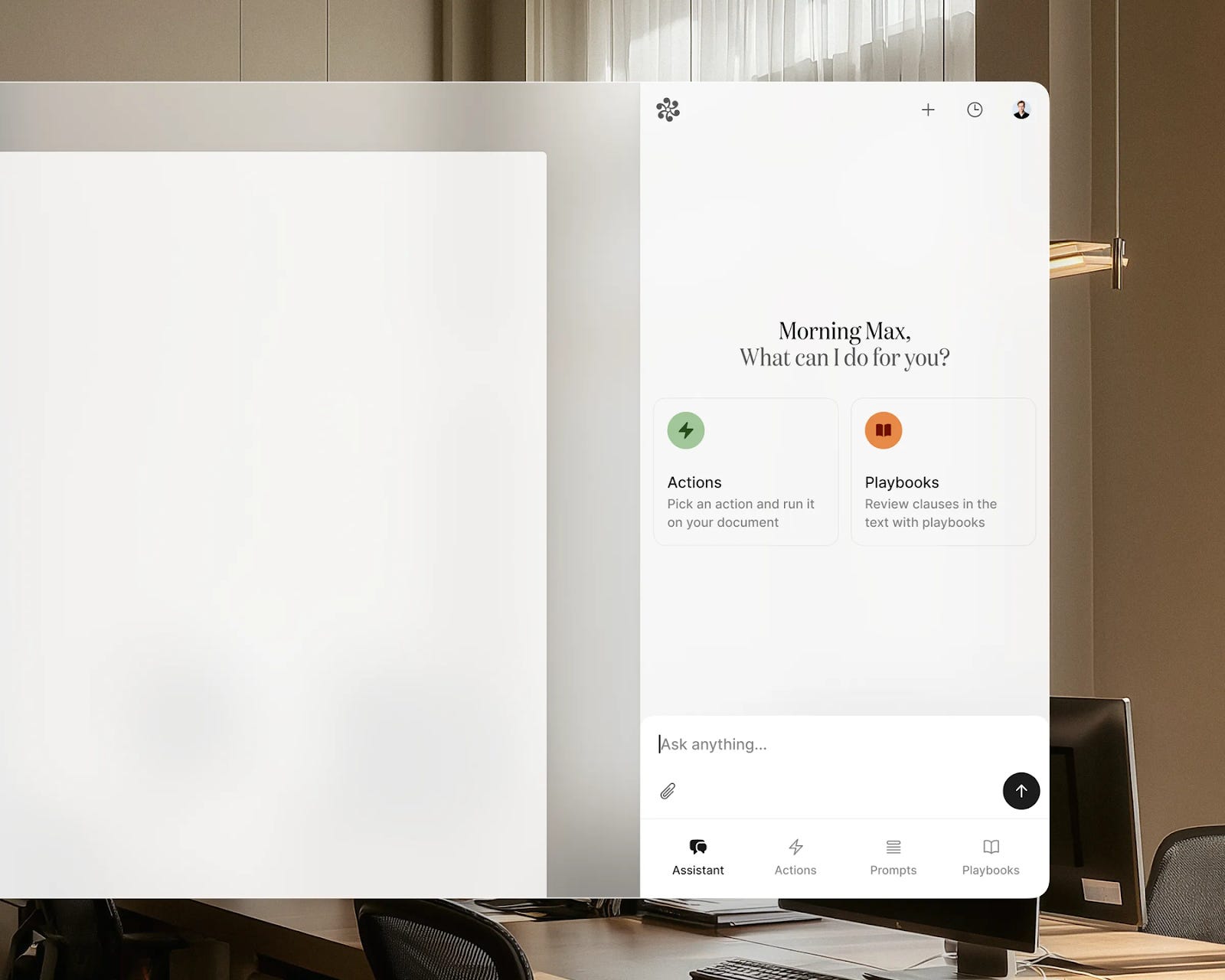
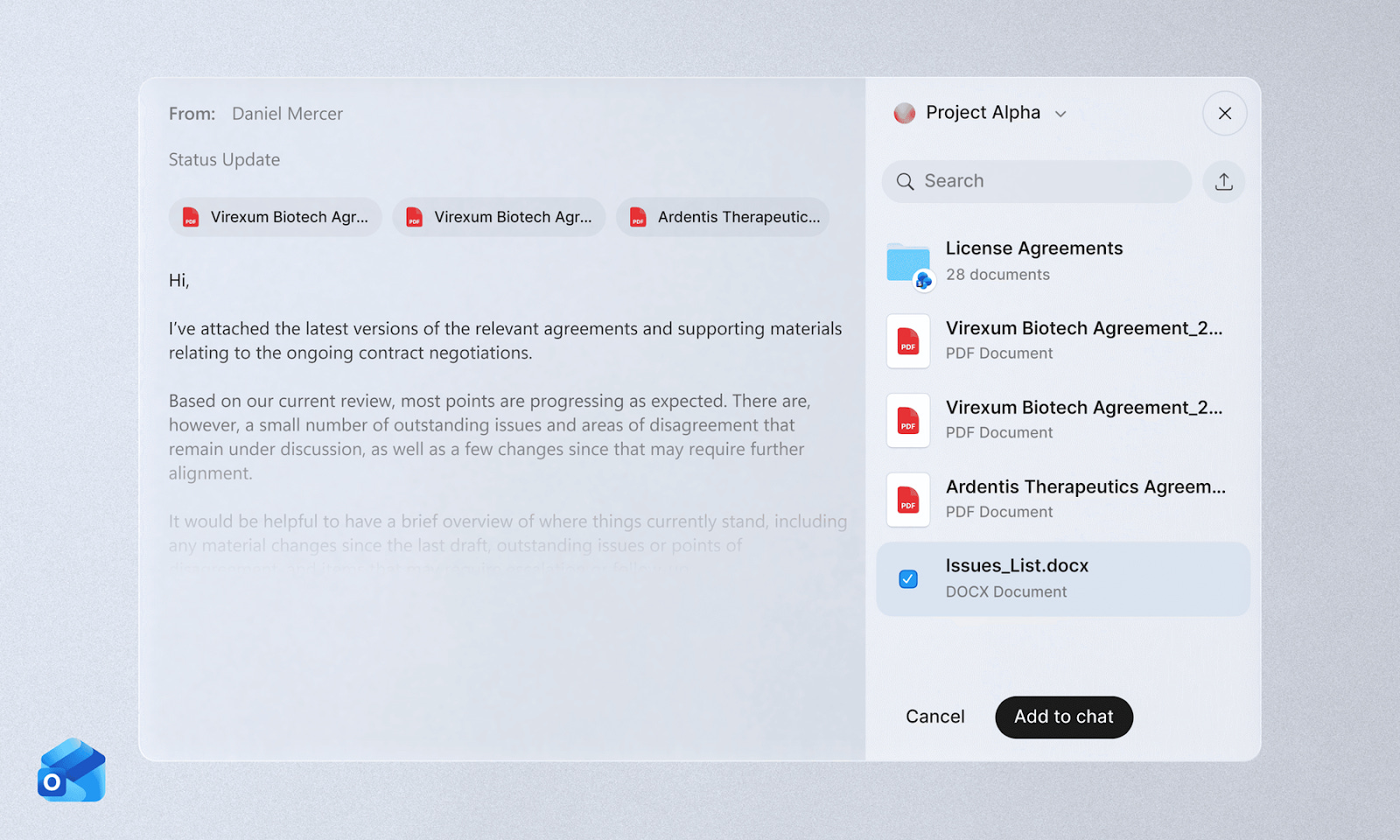
The product answer is to sit inside the places where legal work moves. In Word, Legora drafts, proofreads, flags risk, and redlines against house rules. In Outlook, it sums up threads and drafts replies in the inbox, and Tabular Review turns huge document sets into a table whose cells show reasoning and source text. Editor keeps drafting tied to the review and research that shaped it, while the research layer draws on trusted legal content and firm data. Portal extends the same system to client exchange, so a firm can share work, files, and firm-built playbooks through one branded space.
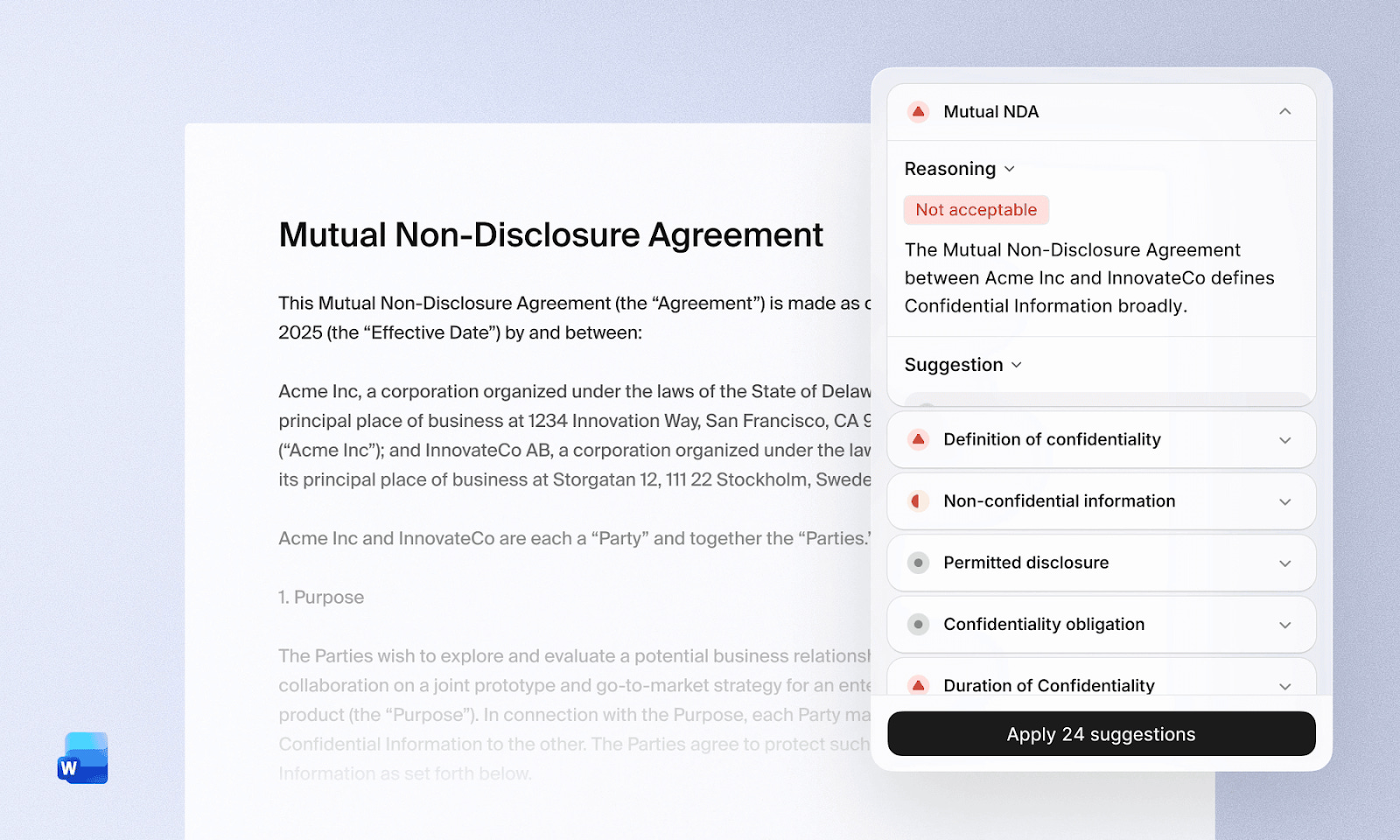
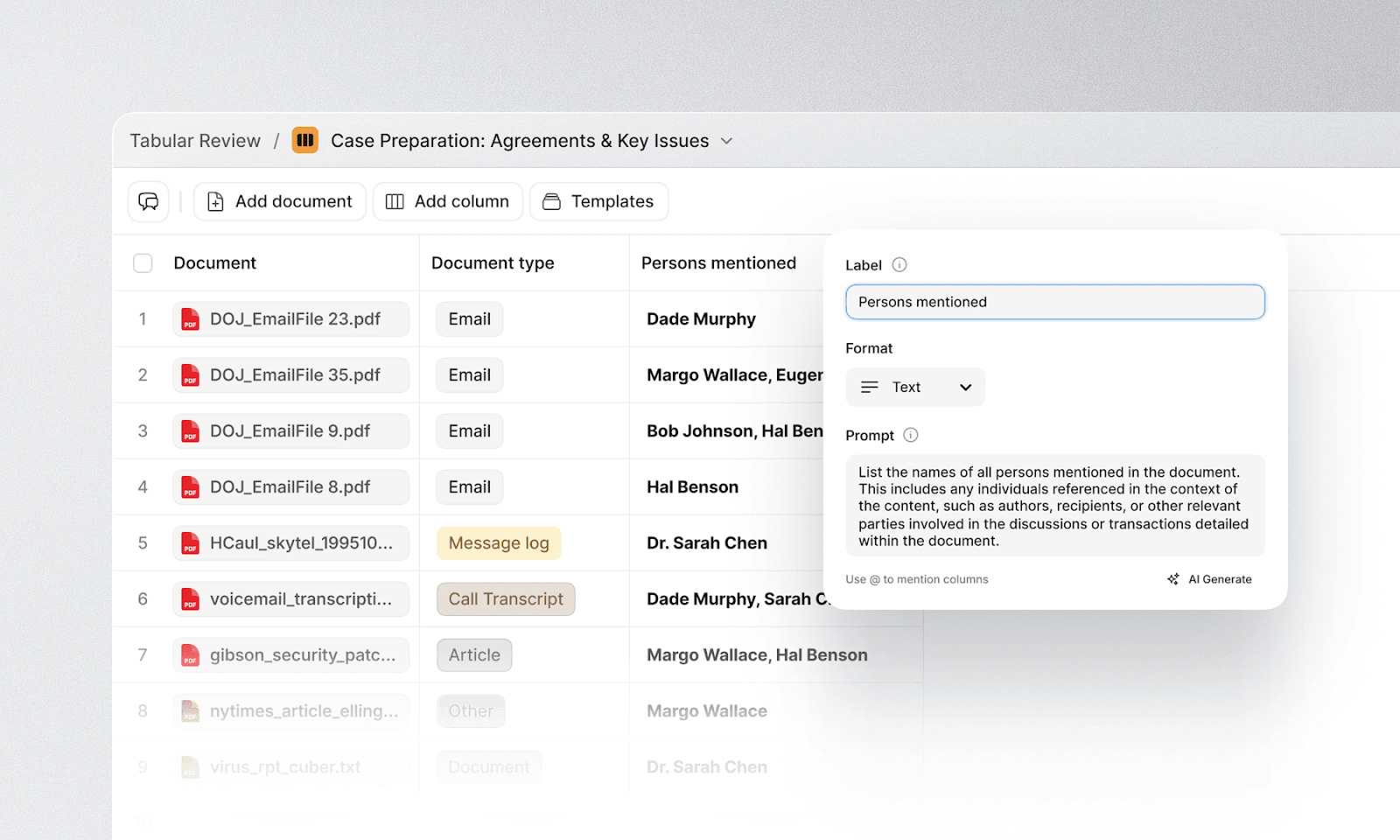
What gives that package force is its use inside shared legal work, with a source trail that follows each step. The platform is built around cited answers, source-linked cells, and traceable outputs, and the security posture is tuned for firms and banks that guard sensitive files. Legora presents use cases across M&A, litigation, tax, and banking. With reported gains in document review time, measured productivity, and the shift of hours from low-value tasks into higher-value work. That value pitch has landed in large deployments, from BCLP’s 1,200-lawyer rollout to Barclays’ in-house team and Husch Blackwell’s more than 1,000 attorneys.
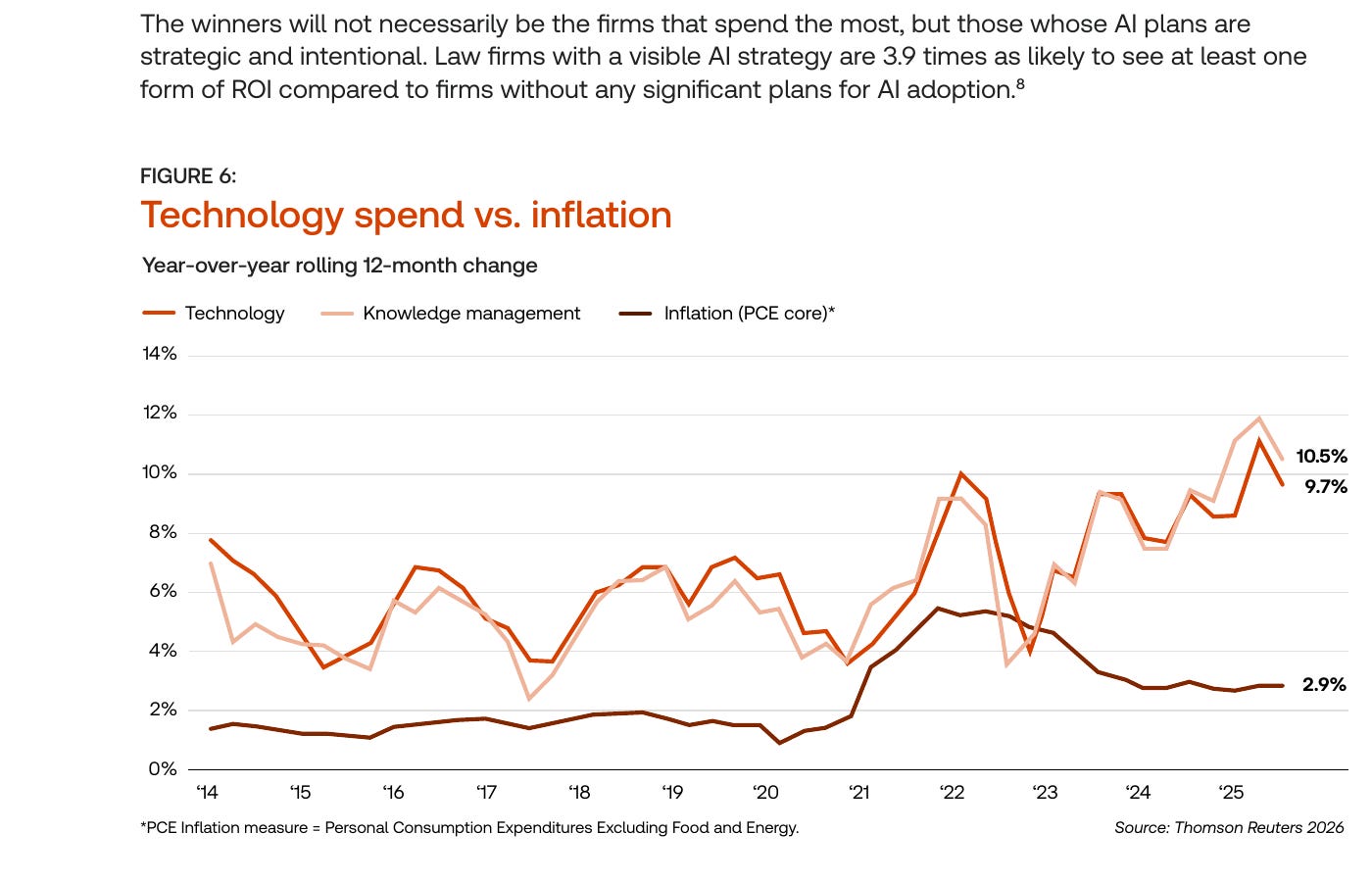
The idea waited for the wide release of large language models. The market now shows the phase after first contact, where most firms and legal teams use GenAI in some form and many use it each week. At the same time, spending on tech and knowledge tools has surged, clients press for cost control, and firms with visible AI plans are far more apt to report returns. Legal buyers now want systems that fit bill pressure, knowledge control, and client scrutiny. That helps explain why workflow design, provenance, and rollout support have become part of the product itself.
The market here is large in both spend and seats. As an inference, if workflow software captures 1% to 3% of a legal-services market worth $1.05 trillion, top-down TAM lands near $10.5 billion to $31.6 billion. A bottom-up seat view across the United States and Europe yields a base above 2.3 million lawyers. Its wedge is plain from the logos and rollouts. Legora says it serves more than 800 law firms and in-house teams across 50 markets. Named wins include White & Case, Dentons, and Barclays, while BCLP has put the platform across its 1,200 lawyers. On that view, the serviceable market is the upper end of firms and legal departments that can buy enterprise AI now, while the obtainable market has moved past theory into tens of thousands of lawyer users each day.
Legora enters a field with sharp new peers and rich incumbents, and Harvey pitches AI for legal and professional services across research, due diligence, workflows, and document storage. CoCounsel sells expert-backed AI tied to Westlaw, Practical Law, Microsoft 365, and other work tools. Lexis+ with Protégé has moved from an AI assistant into a full drafting, research, and analysis workflow suite. Vincent pairs legal AI with vLex’s database, and Vincent Studio gives large firms a way to turn firm process into governed workflows. Legora’s path relies on a shared workspace across the file. It also relies on fit with Word, Outlook, iManage, and client portals. Beyond that, it leans on source-grounded output and on legal engineers who help firms shape and absorb new workflows.
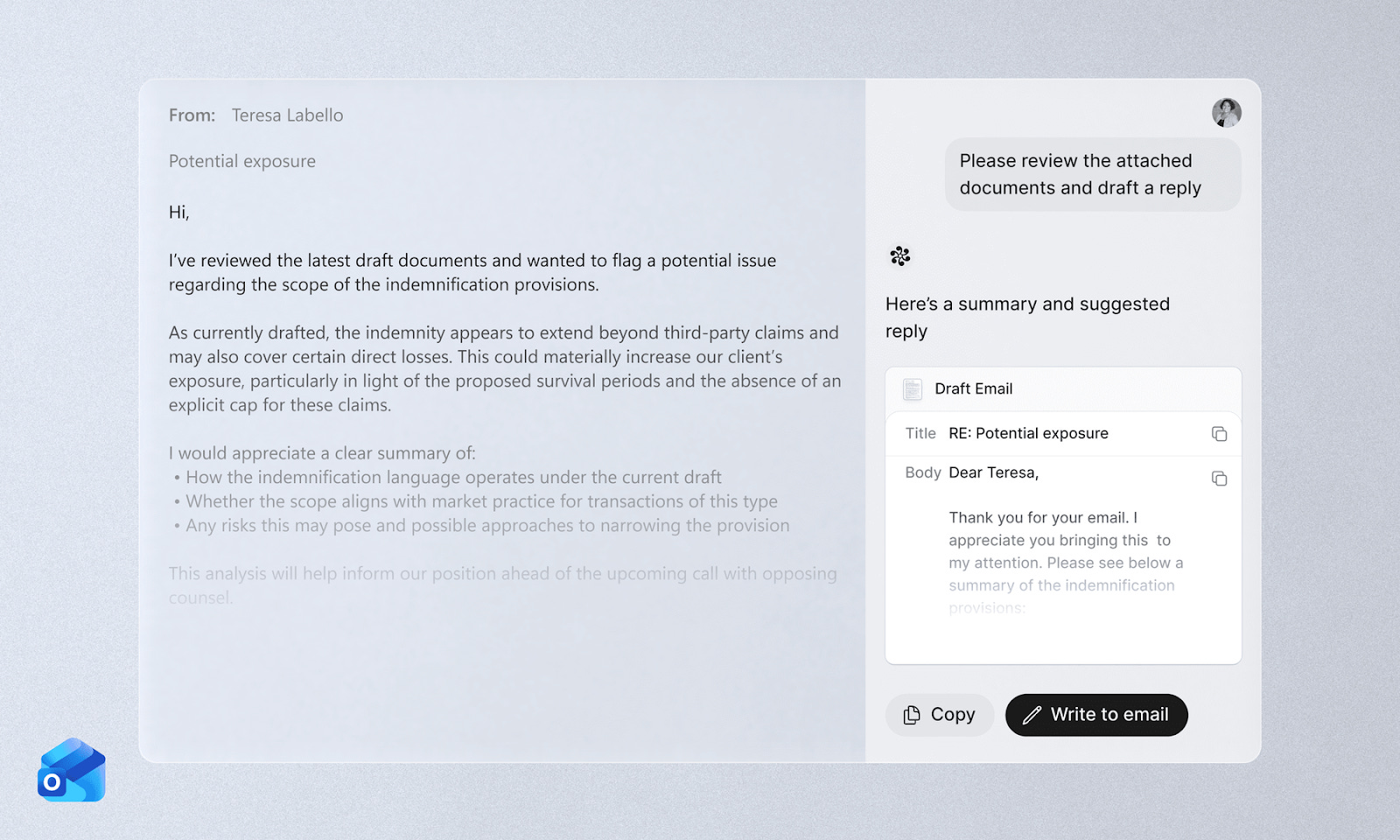
The product line now has the shape of a platform, with Word, Outlook, an in-app editor, and tabular review at its core. It also covers workflow design, legal research, and a client portal, with firm data and external legal content feeding the same workspace. The architecture in view is enterprise grade. Legora points to ISO 42001, ISO 27001, SOC 2 Type 2, and GDPR. It also points to zero-trust access, no model training on customer data, source-traceable outputs, and direct iManage connection through APIs. The near road map is visible in a January Editor launch, a February iManage expansion, and a March Walter AI deal aimed at multi-step agents; the next step is to turn firm knowledge and work patterns into repeatable systems that can run across teams and across client work.
The commercial shape is enterprise software sold with service wrapped around it. They steer buyers to demos, and the rollout stress phased deployment, change programs, and legal-engineering support. Recent wins show a sales motion aimed at large firms and large in-house teams. The pattern points to negotiated enterprise deals rather than posted list pricing, with account worth tied to seat count, workflow depth, client portal use, and data connection. The team is still founder led, with Max Junestrand from machine learning, software, and growth roles and with Sigge Labor from full-stack startup work. Headcount rose from 40 to 400 across six cities in a year. The finance view that can be seen in public is a $550 million Series D at a $5.55 billion valuation plus fast hiring.
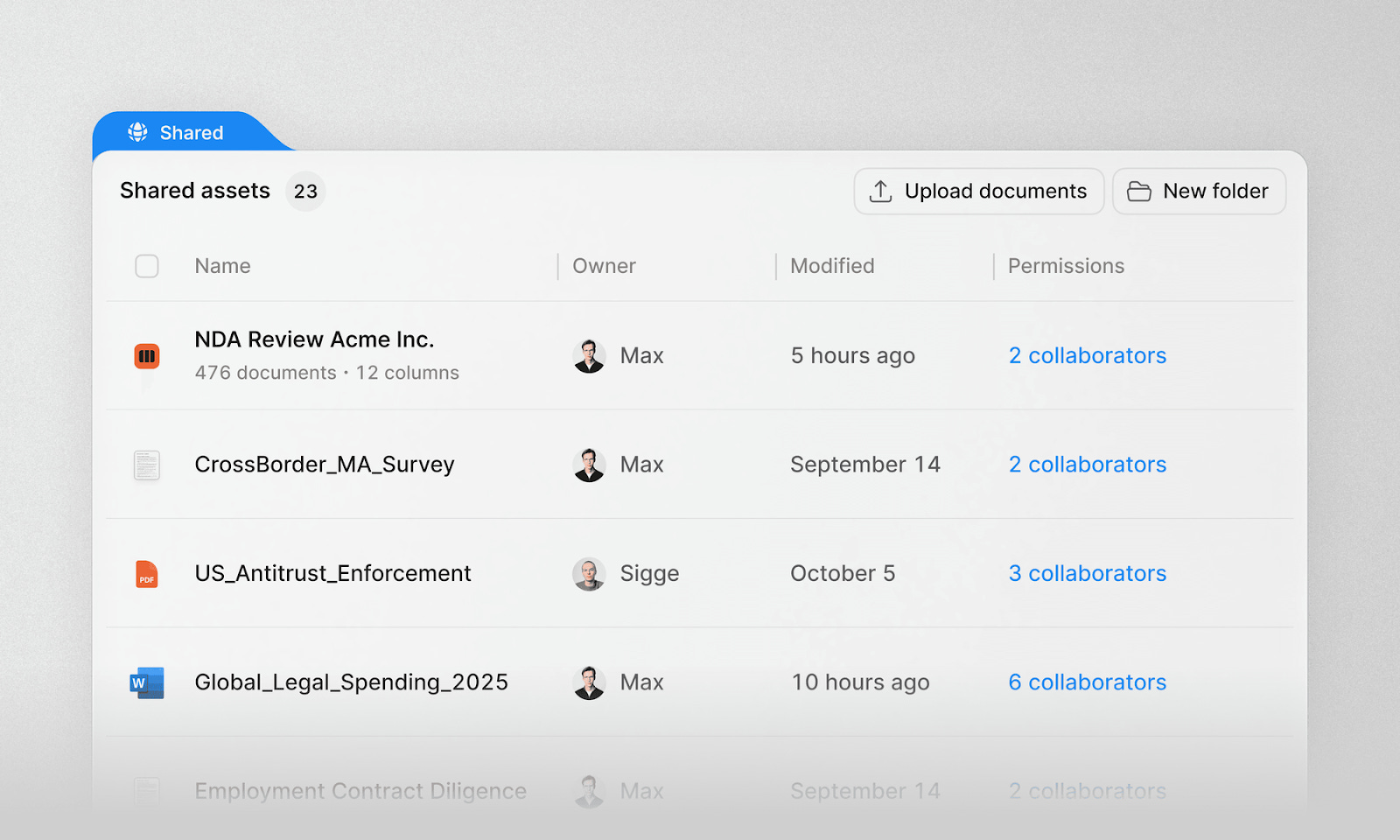
If the company gets its way over the next five years, it will have moved from an AI tool used inside tasks to a legal work layer used across engagements. The signs of that path are present in the portal, the iManage tie-up, the Outlook and Word surfaces, the workflow builder, and the Walter deal aimed at end-to-end agent work. In that future, a firm’s know-how sits in playbooks, data links, and review systems that can be shared with lawyers and clients without severing the human chain of judgment. That vision leaves the lawyer in charge and cuts drag from repeat work, which frees more time for strategy, negotiation, client contact, and judgment that still needs a person to own it. That is the future its product, go-to-market, and recent moves are trying to build.